

Relationships
Living with addiction makes the family sick too
You do not use anything. But you have slept badly for years, you watch, you cover, you explain, you wait. Those who love someone with an addiction live inside the same system, and they need care too. Not because they caused anything, but because they have spent too long in survival mode.
By Isabella Becker · 13 min read
English edition of Isabella Becker’s Portuguese essay, adapted for international readers. The article presents Virtology’s interpretation; its specific theoretical mechanisms should be distinguished from independently established clinical findings.
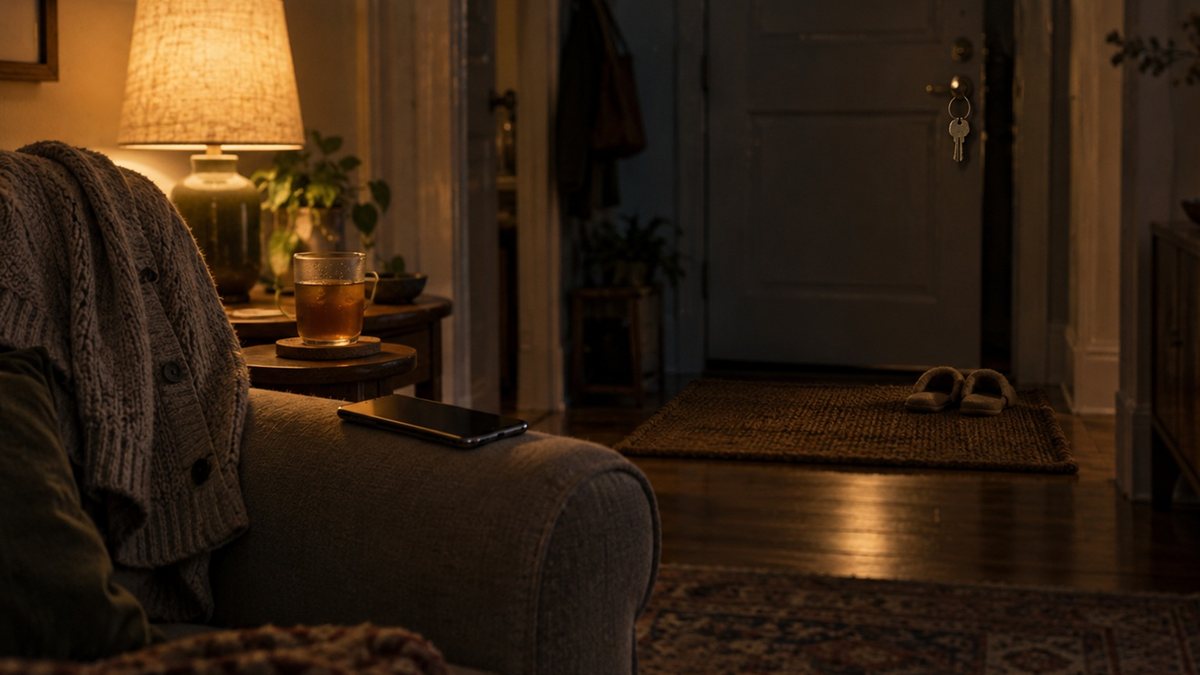
You do not use anything. But you have slept badly for years. You wake to the sound of the key in the door, or to its absence. You keep your phone next to your pillow. You check the bank statement before breakfast. You hide your purse, call his friends, make up an excuse for the neighbor, cry in the bathroom so no one sees. And when someone asks how you are, you answer by talking about him.
If you are the mother, father, wife, husband, child or sibling of someone with an addiction, this article is yours. And it begins with something nobody may have told you yet: you need care too.
“You have been running in survival mode for so long that you have forgotten another mode existed.” — Eduardo Casarotto
Nobody caused it
Before anything else, one sentence needs to come first, because many families read anything on this subject looking for their own guilt. Addiction is not explained by the fault of one person in the family. It involves a history, living and health conditions, choices and access to care. In Eduardo Casarotto’s Virtology, addiction is also not a lack of love or a weakness of character. The person with an addiction loves their family. What happened is that their brain came to give the substance more value than almost anything else.
What this article will show is not where the family went wrong. It is what living with addiction has done to those who live with it, and what can be recovered. At some points I will speak of the family’s pride and selfishness, and that is not an accusation. In Virtology, pride and selfishness are two survival systems every human being carries, and they show up in the person who uses and in the person who cares, each in their own way. There is no good side and bad side. There is one system, with several people inside it.
How the whole house gets sick
Casarotto uses the word system because one person’s life affects the lives of the others. In many families, the use comes to take over almost every conversation and decision. The use leads to watching. Watching leads to secrecy. Conflict makes someone pull away. One person takes on nearly all the caring, and another stops asking for what they need.
The toll on those who live with addiction tends to show up in similar places:
- In sleep. You sleep with one ear on the door. Any noise in the night becomes bad news before you even know what it is.
- In watching. His phone, his room, the bank statement, the time he gets home, the smell of his clothes. The scanning does not stop even when he is doing well.
- In secrecy. The relatives do not know, the church does not know, the neighbor hears one version. Shame protects the family’s image and charges for it in isolation.
- In the body. Blood pressure rises, the stomach complains, the cold does not clear up, the mind does not switch off.
- In your own life. Friends disappeared, leisure disappeared, work became only obligation. And the sentence that postpones everything appears: when he gets better, I’ll start living again.
- In the others at home. The child who causes no trouble has learned not to ask. The spouse has been left without a partner. The elderly parents have stopped getting visits. The whole house has come to revolve around one person.
None of this is an exaggeration. It is what happens to anyone who lives on alert for years.
The body of the one who keeps watch
There is a brain reason you feel this way, and understanding it helps you stop demanding so much of yourself.
Deep in the brain, one on each side, are two almond-sized structures called the amygdalae. They work as an alarm: they detect threat and prepare the body to react, with a racing heart, shallow breathing and stress hormones flowing. This alarm was built to go off and then switch off. Those who live with addiction live in a situation where the threat does not pass. Any night can end with a phone call. So the alarm almost never switches off.
And an alarm that stays on has an effect the family feels in its own skin. The neuroscientist Amy Arnsten describes what intense, inescapable stress does to the prefrontal cortex, the front part of the brain where we stop, weigh things up and choose: it loses strength, and automatic responses gain ground (Arnsten, 2009). That is why an exhausted mother shouts, pays, searches, gives in, even knowing it does not help. She is not weak. She is making decisions with weakened brakes, from inside a brain that has been on alarm for years.
Virtology adds one piece to this. It describes the belief “either I control everything, or I will be destroyed” as what keeps the amygdala and the stress system on alarm. People who live with addiction almost always carry this belief without noticing it. And it makes sense: for a while, watching seemed the only way to prevent the worst. The problem is that watching does not control another person’s use. It only keeps your body at war.
What is missing in the one who cares
In Virtology, every person has 51 needs, and each one can be given a score from 0 to 10. Below 4 is deficiency. From 4 to 7 is the balance zone. Above 7 is excess.
Casarotto gives an example of how that scale can look for someone who cares. The scores are illustrative, and yours depend on your experience. Restoration, the rest that actually restores, at 2. Security at 3. Fun at 2. Privacy at 1. And Control at 10. It is the portrait of someone who does not rest, does not feel secure, does not have fun, has no space of their own, and tries, all the time, to hold another person’s life together with their own hands.
And the family is subject to the same rule as the person who uses: a lack in a basic need is not interpreted, it is regulated. Nobody reorganizes their life, or practices any virtue, on an empty tank.
“Along with the first virtue, from the very first day, you will need to sleep, to eat, to have some space of your own, to have someone to talk to. That is not selfishness. It is engineering.” — Eduardo Casarotto
There is a more delicate layer, too, and I bring it carefully, because it is not true for everyone. After years of this routine, the role of the one who cares can gradually take up the space of every other role, until it becomes the only place where you recognize yourself. I wrote about how this happens in Who is the mother paying her son’s debt really caring for?. Virtology describes this risk in those who care: when all of a person’s worth rests on a single role, losing the role means losing the ground. If that is your case, letting go will hurt in a way you do not expect, and the pain will ask you to hold on again. It is worth looking at, without guilt. I wrote about the healthy limit of the one who cares in Caring for others calms the one who cares.
What is in your hands
You cannot answer alone for another person’s recovery. But there is a part of the system that is yours, and it weighs more than it seems.
A review of studies with families of people who were refusing treatment showed that the approach that brought the most people into treatment was training for the family itself to change the way it relates to the person who uses, called CRAFT, ahead of support groups and confrontation (Roozen, de Waart and van der Kroft, 2010).
Changing your part does not mean your part caused the problem. It means it is the only part you govern. In practice, it involves three swaps. Swapping care that revolves around the use for care that revolves around the person, which is the subject of Who is the mother paying her son’s debt really caring for?. Swapping threats and pleading for a boundary, which is what you do rather than what you demand of him, as in A boundary is not a punishment, where I describe that study in detail. And swapping the shouting on the day of a relapse for the calm that takes care of safety first, as I wrote in A relapse does not erase the path.
None of these swaps is abandonment. The family keeps providing food, a safe home, access to treatment, a listening ear. Nobody withholds food, shelter or emergency help to teach a lesson. And in the face of a risk to life, you always protect. What goes is what sustains the use: loose money, covered-up lies, debts paid without a question.
The family’s path, virtue by virtue
The family also has a path of its own, and it is not a smaller version of the path of the person who uses. It is a different one, for a different system. In Virtology, it follows the Pyramid of Virtues: first the whole Treatment Foundation, then Development, and the Top as the horizon. No virtue works alone, and no Development virtue holds without the Foundation underneath it.
Humility comes first. In the family, pride usually takes three forms: social shame (“what will the neighbors think”), knowing (“I know my son, nobody can teach me anything”) and importance through caring (“without me he won’t survive”). Humility, here, is asking for help for yourself, and not only for him. It is saying the name of the problem out loud to someone outside the family. And it is also not falling into pride’s flip side, the “I was a terrible mother, it’s all my fault,” which looks like humility and is the same ruler, only at the bottom end. Neither heroine nor villain.
Selflessness comes paired with Humility, from the beginning. For the family, which has already given up almost everything, it does not ask for more renunciation. It asks for something else: putting his growth ahead of your relief right now. Letting the night be bad instead of paying to make it end. And it asks, at the same time, that the others in the house get their place back, and that you start to exist again. The marker of Selflessness is that the other person comes to have an agenda of their own in the way you talk. In the family, that includes the child who causes no trouble, your spouse, and you yourself.
Then comes the rest of the Foundation, in no fixed order, and none of it can be left out.
Acceptance begins with the name: he has an addiction, and that is what it is. It goes through mourning the imagined child, the one who should have been, so that the real child can be loved. And it separates what is within your reach from what is not. Another person’s use is not.
Forgiveness has two addresses. Him, for the money that vanished, for the lies, for the nights. And you, for what you did without knowing how to do better. Forgiving is not forgetting, nor accepting everything. In situations of violence, protection comes first, and nobody has to force reconciliation, contact or living together to prove they have forgiven. The marker of Forgiveness is being able to think of the person without your body reacting.
Individuation is becoming someone again beyond the role of the one who cares. It answers the sentence “when he gets better, I’ll start living again” with a now. It starts small: recognizing a need of your own and standing up for it respectfully. And it includes no longer running the household according to what the church, the relatives or the neighbor will think.
Responsibility separates being responsible from being guilty. The question of guilt is “where did I go wrong?”, and it leaves a person on the floor. The question of responsibility is “what is mine to do today?”, and it leads to the group, to the doctor, to the boundary, to sleep. Its marker is that the way you talk turns toward the future and solutions.
State of Certainty swaps the hope that rises with every clean month and crashes with every relapse for a certainty that does not depend on yesterday’s news. It is neither denial nor a guarantee. It is being able to act without knowing the outcome, and taking your peace out of the inside of his outcome.
Perseverance asks for a curious swap, because families are usually too persevering, only in the wrong gesture. They persist in rescuing, which does not work. Perseverance is continuing on the new path: the boundary kept on the tenth day with the calm of the first, the group in the week you did not feel like going, care for yourself on the day he is doing badly.
Only with that Foundation underneath does Development come. Optimism, which rests above all on State of Certainty, retrains the eye that spent years looking for signs of use, and brings back the question “what good thing did you do today?”. Good Humor brings laughter back to a house that stopped laughing, with one fixed rule: never joke about him, only about the situation and about yourself. It requires Humility, Acceptance and Forgiveness first. Gratitude sees his small progress and the people who became invisible at home, and requires Acceptance and Responsibility first. Honoring Family re-centers the house outside the addiction and gives the person who uses back their place as a family member, not a case. It requires Acceptance, Forgiveness and Individuation first. Its marker, for the family of someone with an addiction, is lovely to see: an entire family conversation in which nobody mentioned the addiction, and nobody felt anything was missing.
At the Top, as the horizon, is Helping Others. It is the mother who arrived at the family group in despair and, in time, comes to welcome the ones who arrive in despair after her.
A week to give you back a place in your own life
This is not a plan to save anyone. It is a start at taking your body off alarm and existing again inside your own home.
Taking care of your part of the system
- Make your scale. Give a score from 0 to 10 to five needs: rest, security, fun, privacy and control. Below 4 is deficiency, 4 to 7 is the balance zone, above 7 is excess. The score is not a diagnosis. It only shows where to begin.
- Choose one need in deficiency and one small action. If it is sleep: go to bed half an hour earlier, with your phone’s ringer on and the screen face down, out of reach. You can stay reachable without keeping watch.
- Tell one person outside the family. One sentence is enough: my son has an addiction, and I am tired. Saying it out loud already takes away part of shame’s power to isolate.
- Let go of one kind of watching. Just one, and one that involves no risk to life. Before you check, ask: is this within my reach? If it is not, do not check today.
- Give a place back to someone else at home. The child who causes no trouble, your spouse, your parents. Twenty minutes with them, without talking about the problem.
- Look for help for yourself. A family support group, your local health services, an addiction service. For you, and not only for him.
- At night, write three lines. What triggered me today, what I did, what I will do next time. No punishment and no praise.
If the week does not happen in full, it was not wasted. The point is not to complete a list. It is for your body to learn, little by little, that another mode exists besides the alarm.
Caring for yourself is not betrayal
Many mothers hear “take care of yourself” as if it were a request to abandon their child. It is not. A person who sleeps, eats, has someone to talk to and has got some life of their own back makes better decisions, holds out longer, and can be present without dissolving. Their presence is worth more than the watching that came before.
Your rebuilding does not need to wait for another person’s recovery. It can begin today, at whatever size is possible, alongside your care for the person you love.
If there is violence or a threat against you or anyone in the home, protect yourself and call emergency services. If the person is very drowsy, confused, breathing slowly or having a seizure, call emergency services immediately. If they drink heavily or take sedatives and are about to stop suddenly, take them to a doctor first, because that kind of withdrawal can be dangerous. Local health services and addiction services can guide treatment for the person who uses and support the family too, and family support groups are usually free. And if, in the middle of the exhaustion, thoughts of death appear, yours or theirs, contact a crisis line in your country at any hour. The one who cares also has the right to be cared for.
Continue with SNO and SNE: two systems at the root of neurosis, Pride is not what you think, or the 12-Step guided trail.
Talk to the Institute
Our international directors
Looking for a certified Virtologist, information about the training, or a partnership outside Brazil? Write to the international director for your region.
Write to Isabella Becker · EMEA →Write to Ana Karolina Cejudo · Americas →International Directors · Instituto Virtudes
Study the science
Learn Virtology at the Institute
Want the whole framework, for yourself or to help others as a professional? Start with the short course, or take the full training with Dr. Eduardo Casarotto.
★ The full path · become a Virtologist
The Institute’s Professional Formation with Dr. Eduardo Casarotto is the complete training: the entire framework, the clinical method and the certification to practice.
Explore the Professional Formation →Instituto Virtudes
About this English edition
Translated and edited from the Portuguese essay.